


Product Category
Ayurvedic Medicines
Kerala is home to the traditional Ayurvedic System of medicine and has been so, from time immemorial...
Spices
Product Details
Indian spices are prized the world over. They are an indispensable part of the culinary art. They give food its flavour and colour. They are known to have medicinal properties.
South India is the leading producer of a variety of spices - Kerala being the spice bowl of the South

Listed below is the range of Spices we offer :
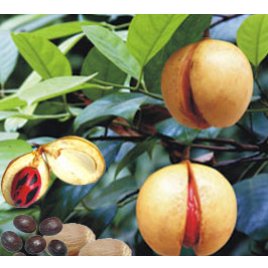
Nutmeg (Myristica Fragrans)
 Nutmeg, locally called 'Jaiphal' in the North, 'Jathi' in the South, is an inevitable ingredient in most cuisines. Folklore imparts magical powers to the dried kernel of the nutmeg seed. It is believed to possess the powers to heal a variety of ailments.
We offer varieties such as:
1. Nutmeg ABCD without shell
2. Nutmeg C110 without shell
3. Nutmeg C 200 without shell
4. Nutmeg C 300 without shell
5. Nutmeg C120 with shell
6. Nutmeg C160 with shell
7. Limed Nutmeg
8. BWP
Besides the above we also deal in sound shrivels and powdered nutmeg.
Mace (Myristica Fragrans)
 Mace is the aril of the Nutmeg seed shell. When dried it loses its bright red colour and develops a characteristic aroma. It is red or orange in colour, brittle, fragrant and sweet with a warm, sharp, flavour - more intense and slightly sweeter than the nutmeg.
Availability ……
Red Mace
Yellow Mace
Cardamom ( Elettaria Cardamomum)
 Cardamom is cultivated for its fruit in Southern and Western India in high ranges engulfed by mist for most part of the year. Cardamom cultivated in Kerala are shorter, more broadly ovoid and wrinkled longitudinally and therefore less smooth than other variety. Cardamom seeds have a powerful aromatic odour and an agreeable pungent, aromatic taste and are mainly used as a spice and as a flavouring agent .
The principal constituent of the seed is the volatile oil, of which they yield on an average five percent. Cardamom oil contains terpinyl acetate, cineole, terpineol etc. Cardamom is a powerful aromatic, stimulant and carminative
We offer....
AGES (Alleppey Green Extra Bold) AGB (Alleppey Green Bold)
AGS (Alleppey Green Superior)
Dry Giner (Zingiber Officinale)
 Dry Ginger consists of the dried rhizomes of Zingiber officinale divested of its roots. Externally the rhizome is pale yellowish in colour, its surface being longitudinally striated and bearing root scars.
Ginger contains 0.25 to 3 percent of a volatile oil possessing the aroma. Pungency of ginger is due to the yellowish oily body, gingerol which is odourless. Ginger is mainly used as a condiment and medicinally as a carminative and aromatic stimulant.
We offer...
NUGC Good
NUGC Special
Bleached Ginger
Ground Ginger
Limed Ginger.
Turmeric (Curcuma longa)/South Indian
 Turmeric occurs in curved or nearly cylindrical pieces. The outer surface is of a deep yellowish brown colour longitudinally wrinkled and marked with transverse rings. Turmeric contains about 5 percent of volatile oils, resin and a crystalline yellow substance curcumin. Curcumin is now belived to have antiseptic and cancer preventing properties.
We offer...
AFT (Alleppey Finger Turmeric)
MFT (Madras Finger Turmeric)
Ground Turmeric
Fennel Seeds (Foeniculum vulgare)/South Indian
 Cultivated throughout India, fennel seeds with its essential oil is used as a stimulant, aromatic, carminative and diuretic. Fennel fruit yields about 3 to 5 percent of volatile oil of a pleasant aromatic odour and is used as a flavoring agent.
Sesame Seed (Sesamum Indicum)/South Indian
 Sesame Seed is cultivated throughout India. Seeds are flattened ovoid, pointed at one end about 3 to 4 mm long, 2mm broad, lmm thick, buff coloured or whitish. Seeds contain fixed oil about 45 to 55 percent, proteins about 15 to 20 percent. Seeds are nourishing, lactagogue and laxative.
Coriander (Coriandrum sativum)/South Indian
 Coriander is aromatic, stimulant, carminative, antibilious and diuretic.
It is mainly used as a condiment.
Coriander boiled in water is pleasant and is used in indigestion.
Cumin Seeds (Cuminum cyminum)/South Indian
 A valuable essential oil, thymene, rich in carvone obtained from the seed contains cuminol. This essential oil is colourless or pale yellow with a strong odour and flavour of the fruit. Seeds are carminative , aromatic, stimulant and cooling and is used as a flavouring agent. It is largely used as a condiment or spice in curries and pickles.
We offer two types:
Black Cumin Seeds
Cumin Seeds
Chillies (Capsicum annum)/South Indian
 India is famous for its use of chillies. The pungent aroma and taste that chillies impart to food is an essential part of Indian cuisine.
The most important constituent of chillies is capsaicin which gives it its pungency.
Chillies, raw, dried or in the powder form are the commonly used/exported varieties.
Pepper (Piper nigrum)/South Indian
 Pepper is an integral part of Kerala cuisine and has been in demand from ancient times. Ancient traders are believed to have come to Kerala's shores only to take away this exquisite produce of the State.
We have on offer TGSEB
(Tellicherry Garbled Special Extra Bold)
TGEB
(Tellicherry Garbled Extra Bold)
MG1
(Malabar Garbled)
MGU/FAQ
(Malabar Ungarbled)
Galangal Roots (Languas galangal)/South Indian
 Obtained from Alpinia galanga, the roots consist of a branched rhizome which are a dull reddish brown and longitudinally striated. It is hard, tough and difficult to break. Galangal rhizome contains a little volatile oil containing cineol, methyl cinnamate and a pungent oily body, galangol. It is mainly used as a stimulant, carminative and
in perfumes.
We offer...
Galangal Roots Whole
Galangal Roots Chips


